
Wearing Multiple Hats Is Costing You More Than You Think
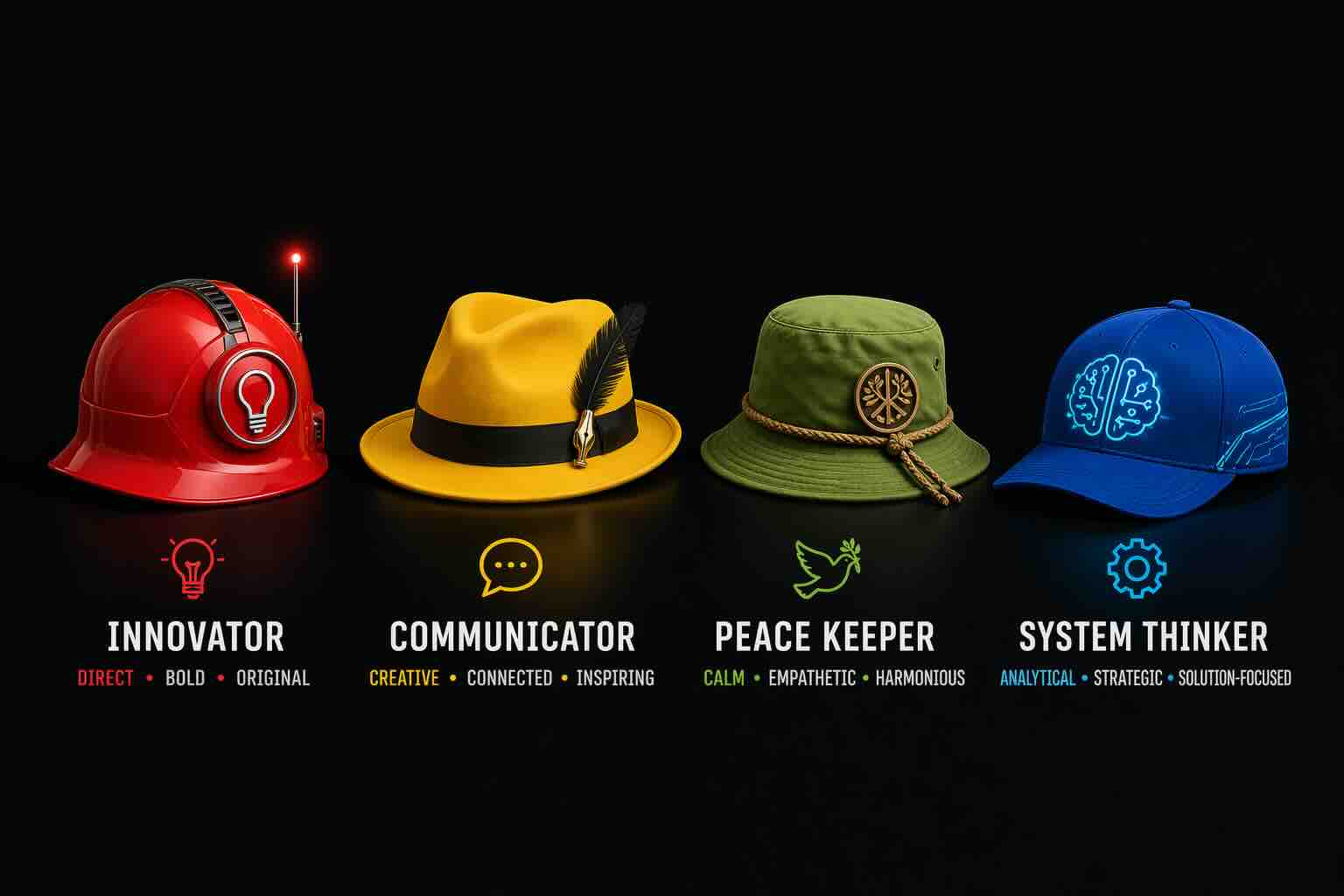
You wear more hats than most people own, and you switch roles a dozen times before lunch. But has anyone asked what that does to you?
A few minutes ago you were crafting a LinkedIn post, choosing words carefully, staying visible, and showing what you know. Then you rolled up your sleeves and moved furniture. Then came the meeting where your job was to create invisible glue between strangers. Then you quietly hid in a corner to write SOPs. And that was just the morning.
Project management in the service industry is like that. You wear more hats than most people own: strategist, operator, facilitator, brand custodian, face-of-the-business, and systems thinker. The versatility is real. The skill is genuine. But here is what nobody says out loud: constantly becoming whoever the moment needs has a cost, and that cost is paid in identity.
The Hollow Feeling Nobody Names
There is a particular kind of exhaustion that has nothing to do with hours worked. It is the feeling of reaching the end of a full, productive day, a day where things went well, and feeling strangely empty. Not tired. Just hollow. Like you performed all day but never quite showed up.
Psychologists call the underlying mechanism role conflict: the internal friction that builds when the behaviours one role demands directly contradict those another requires. In the service industry, where your product is human experience rather than a physical thing, this friction is nearly constant. Every hat switch is emotional, not just logistical.
And over time, without something anchoring you, it produces what I think of as identity drift, the quiet erosion of knowing who you are underneath all the roles you perform. The versatility that makes you indispensable can hollow you out if you have nothing anchoring you beneath all the switching. Research on leadership and burnout consistently points to this:
"It is not the workload that breaks people. It is the absence of a stable self to return to."
The Real Emotional Toll
Let's be honest about what this actually costs you.
In a single morning, you might move from coaching a disengaged team member to delivering feedback to someone who takes criticism personally, to holding firm in a high-pressure client meeting, to turning around and writing a warm, encouraging message to your team. Each of those moments requires a completely different version of you. A different tone. A different energy. A different emotional register.
And when you are a leader, the stakes are even higher. You have to be precise with your words. When giving feedback to a sensitive team member, you cannot just say what you think. You have to think about how it will land, whether it will feel like criticism of the person rather than the work, whether it will shut them down or open them up. You are not just managing tasks. You are managing egos, insecurities, dynamics, and histories, often all at once. That takes an enormous amount of mental effort. And it rarely gets acknowledged.
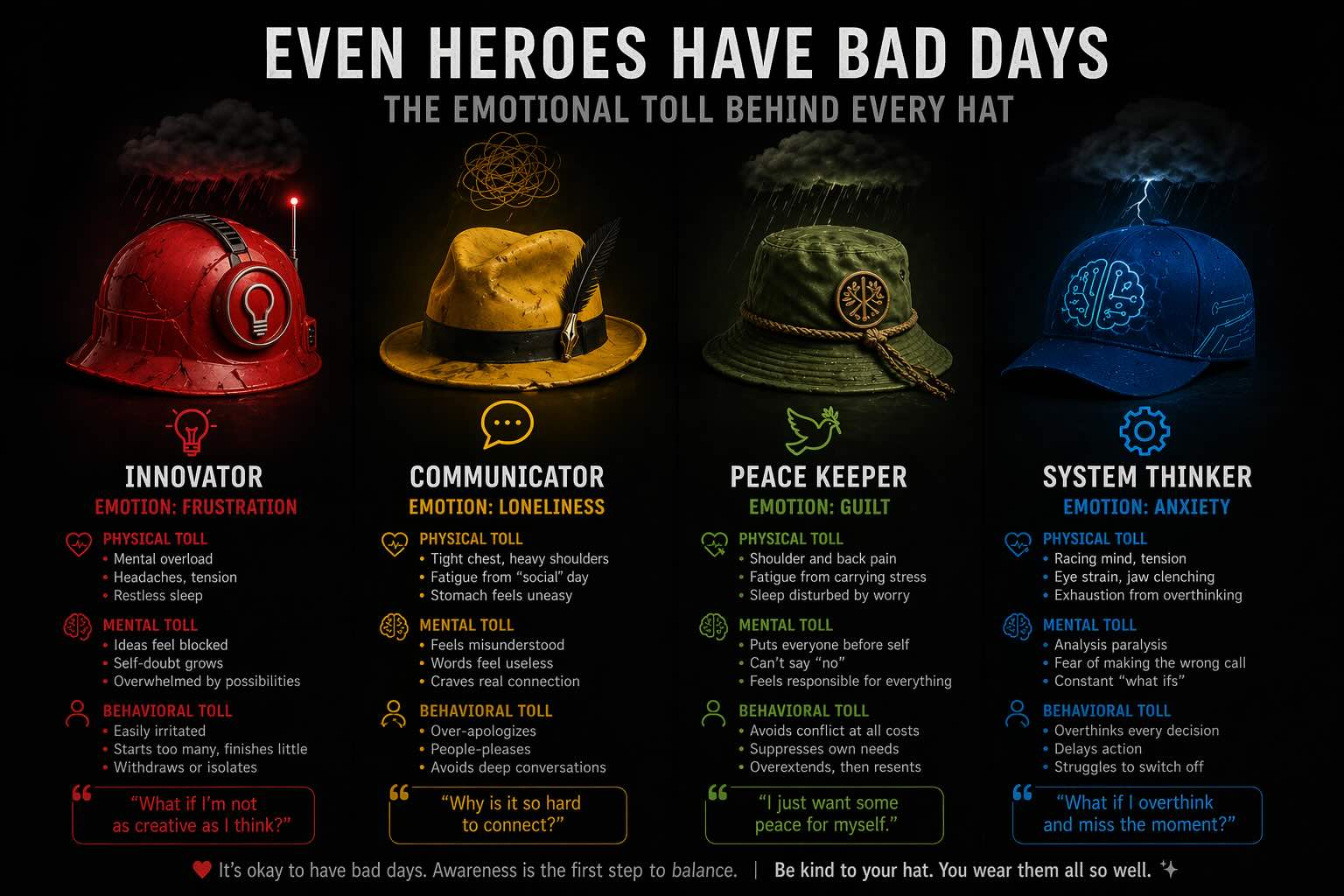
There is also a particular loneliness to leadership that comes from wearing all these hats. When you are giving feedback, people do not always see the care behind it. When you are making difficult calls, people see the decision, not the deliberation. When you are holding a boundary, people feel the boundary, not what it costs you to hold it. You can come across as cold, distant, or too direct, not because you are those things, but because the role requires restraint, and restraint is easy to misread.
And sometimes that weight does not show up during the day at all. I normally wake at five or five-thirty, but when something is sitting on my mind, it finds me before that. Not through worry exactly, but through dreams I sometimes cannot quite remember and a clock that reads 4:34 or 4:54. The body keeps the score even when the mind thinks it has moved on.
If this is you, navigating personalities, managing expectations, and holding teams together while still trying to stay grounded in yourself: take a moment to acknowledge what you are doing. Because this kind of work is invisible. And it deserves to be seen.
"You hold space for your team. You hold space for your clients. So who is holding space for you?"
You regulate yourself so others feel safe. You absorb the anxiety in the room so the room can function. You are, in many ways, the emotional infrastructure of the work.
Most of the time, honestly, no one. And that can feel heavy, until you realise something equally important: that person can be you. Not because you have to do everything alone, but because you are genuinely capable of building practices that bring you back to yourself. That is not a burden. That is a kind of power.
Regulating Yourself So You Can Lead Others
Before frameworks. Before tools. Before strategy. There is something more fundamental: your ability to return to a grounded, steady version of yourself, no matter what the day asks of you.
Here is what that looks like in practice, at least for me.
At the beginning of the day, I journal. Just a simple question: how do I want to show up today? It takes ten minutes, and it sets the tone for everything that follows. It is not about productivity. It is about intention.
At the end of the day, I reflect. What went well? What could be better? Where did I feel most like myself? This is not a performance review. It is a way of staying honest with yourself about who you are being, not just what you are doing.
After difficult moments, especially after conflict, I pause and ask: how did I react? What did I learn about myself? What did I learn about the other person?
"Conflict, when you stop being defensive about it, is extraordinarily useful information. It shows you your edges."
And on heavier days, I keep it simple. A few lines of gratitude. Nothing elaborate. Just a reminder that even hard days contain things worth noticing.
These are small practices. But they compound. And when you are constantly adapting to others, they become the moments where you return to yourself.
Take Care of the Instrument
Your ability to lead, adapt, and hold space for others runs through one thing: you. Your body, your mind, your emotional capacity. If those are depleted, everything becomes harder. Not just for you, but for everyone who depends on you.
This is why taking care of yourself is not indulgent. It is operational.
Physical movement helps, not as a task but as a reset. For me, it is walking. The kind where your thoughts finally catch up with you, where you stop performing and start processing. And swimming early in the morning in Hoi An, the cool water waking up your entire body, pulling you fully into the present before the day has even begun. There is something about cold water and open sky that strips everything back to what is simple and true.
For you, it might be meditation, yoga, running, or any practice that creates space where you are not performing for anyone. The method does not matter as much as the commitment to having one. Because your best leadership does not come from pushing through depletion. It comes from capacity, and capacity has to be protected.
Personal Leadership Is the Answer, But Not the Way You Think
Personal leadership is not a personality trait you either have or lack. It is not a workshop or an assessment. It is a daily practice of knowing your values, your voice, and your non-negotiables and bringing that consistent self into every room, every role, every transition.
Most of us approach our multiple hats with one question: What does this role need from me? That makes you reactive. You become whatever the moment demands.
Personal leadership asks a different question: What do I bring to this role? That makes you generative. You stop being whoever the room needs and start being someone the room can rely on because beneath all the different hats, you are still recognisably yourself.
That consistency is not just good for your wellbeing. It is what builds deep trust. Your team, your clients, and your stakeholders do not trust you because you are versatile. They trust you because you are coherent. Because the person who shows up on a hard day feels like the same person who showed up on a good one.
The ANCHOR Framework
Six practices for staying grounded while wearing every hat.
- Awareness
Name your roles and the transitions between them. Invisible patterns cannot be managed. - North Star Values
Identify 3–5 values that belong to you, not your job title. These travel with you into every room. - Conscious Transition
Build micro-pauses between role shifts; even 90 seconds of deliberate re-grounding reduces identity fragmentation across the day. - Home Role
Know which role feels most authentically like you. Protect time for it. It is where your best thinking and leadership live. - Outer Mirrors
Keep 2–3 people in your life who see you across roles and will tell you honestly when you have drifted. - Regular Reflection
15 minutes weekly: review your role patterns, the emotional costs, and your alignment with your values. Make it non-negotiable.
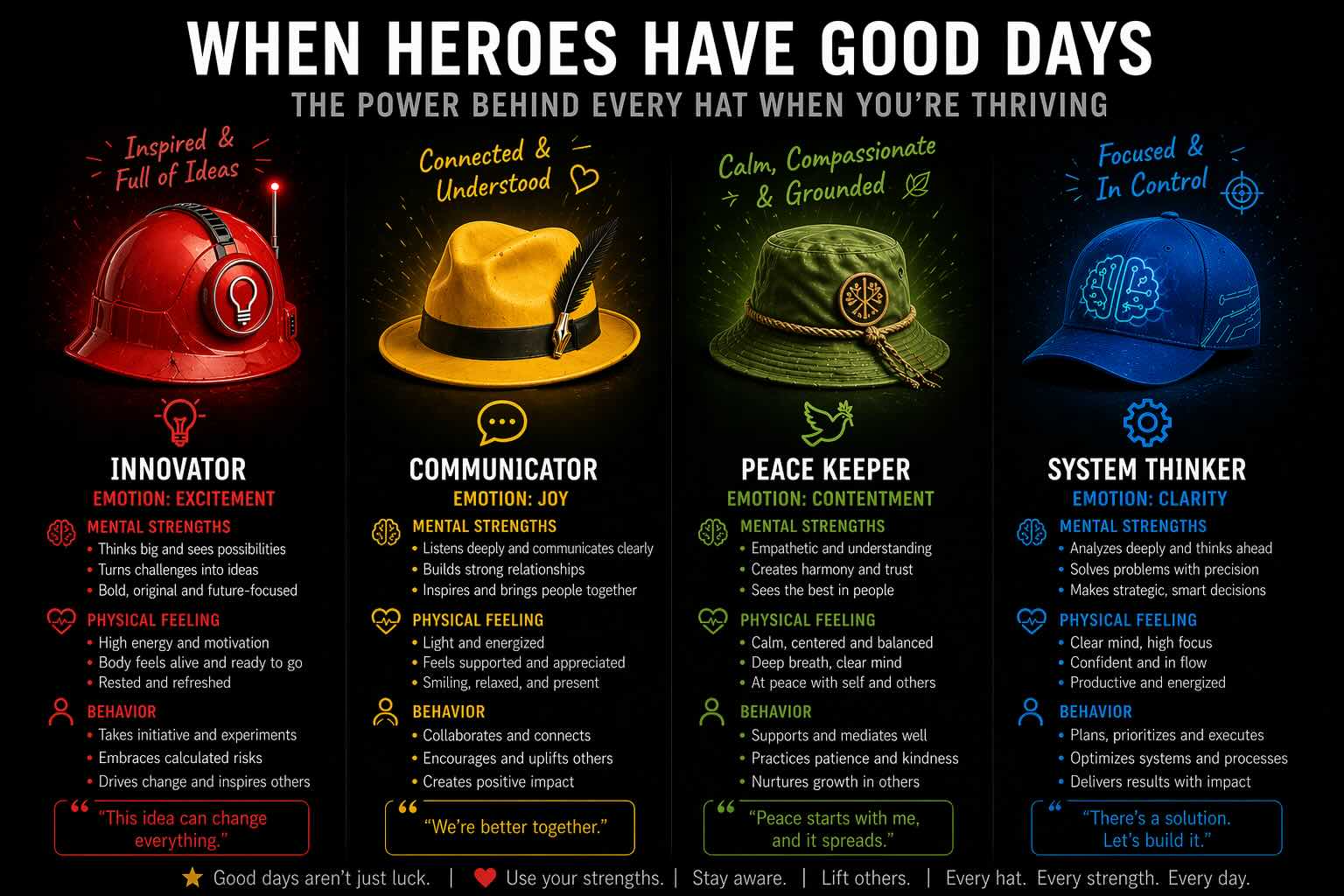
This is what it looks like when you wear every hat from a grounded place.
Your Most Important Project
The world will keep asking you to be versatile. The hats will keep multiplying; that is the nature of project management and especially of service. But beneath all of it, there is still a you. A consistent, particular you with a way of seeing things and a voice that is yours even when you are performing someone else's script.
That self is not an obstacle to your work. It is the source of your best work. Guard it, develop it, and lead from it, and you will find that the hats become tools rather than identities. You will wear them. They will not wear you.
That work starts with a single question. Spend ten minutes this week writing down every role you inhabit on a typical workday. Then, next to each one, ask: when I am in this role, do I still feel like myself? The ones where the answer is yes, those are your anchors. The ones where the answer is no, those are where your personal leadership practice begins.
You do not need to overhaul anything. You just need to start noticing.
Related articles
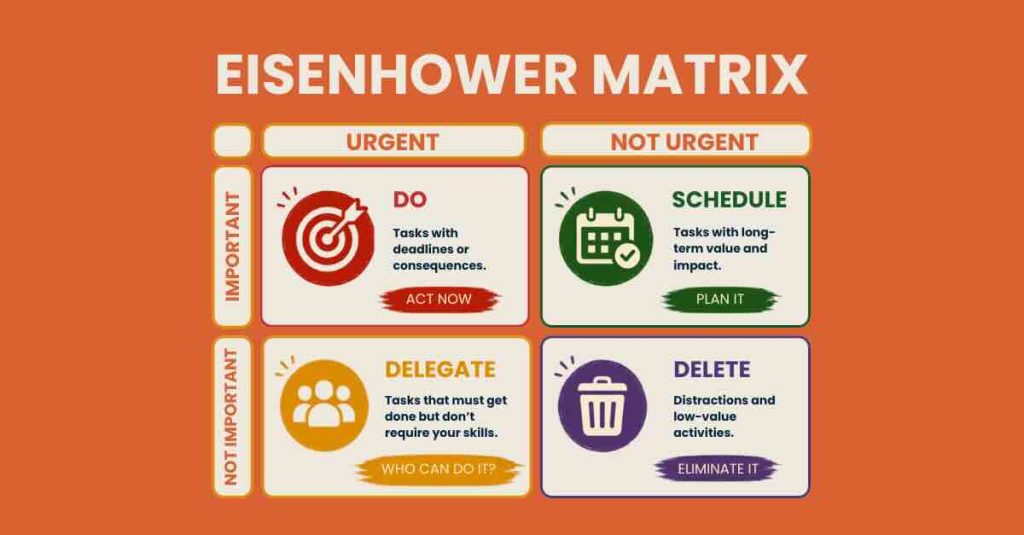
Most Managers Don't Have a Time Problem. They Have a Priorities Problem.
Every day, someone else's urgency becomes yours: messages, meetings, requests, fires to put out. You are moving fast, but somehow never forward. And at the end of the week, you look back and realise the things that actually matter, the ones that would move the needle for your team and your organisation...never got touched.
Stop managing people. Start developing them.
Management is about control. Development is about growth. Your goal as a leader is not to make yourself indispensable. It is to make yourself unnecessary
How Appreciation Can Improve Your Team's Performance
What if the culture you want already exists in your team? You just haven't surfaced it yet.

Stay connected. Get insights, tools, and reflections delivered to your inbox.
Subscribed!
Something went wrong. Please try again.