
The Real Reason Your Feedback Isn't Landing & How to Fix It

Your Feedback Says More About You Than You Think
There was a moment I'll never forget.
I had just delivered what I thought was perfectly clear, direct feedback to someone I genuinely wanted to help. I laid out the problem, explained what needed to change, and wrapped it up efficiently. Clean. Logical. Done.
They walked away looking like I had just dismantled them.
I was confused. I thought I was being helpful. I thought directness was respect. I thought if I could just say it plainly enough, the message would land.
It didn't. And for a long time, I thought the problem was them.
It wasn't.
The Feedback That Changed Everything
Before I understood any of this, I was on the receiving end of exactly the kind of feedback I used to give.
My previous partner was a high-D personality, much like me. Direct, fast-moving, results-oriented, zero tolerance for inefficiency. When he had feedback to deliver, he delivered it. Bluntly. Efficiently. The way he thought respect worked.
And I remember crying.
Not because he was wrong. The feedback was often accurate. But the delivery didn't match what I needed, and the gap between what he intended and what I received felt enormous. I felt criticised, not coached. Judged, not supported.
That experience cracked something open in me. I made a promise to myself: I would never make someone feel the way I felt in those moments, simply because I hadn't taken the time to understand how they actually receive information.
That promise became the foundation of how I lead.
Why Most Well-Meaning People Still Give Bad Feedback
Here's the uncomfortable truth: most people give feedback in the style they would want to receive it.
If you're direct, you deliver directly. If you're analytical, you lead with data. If you're expressive, you wrap everything in encouragement first. You're not being selfish. You're defaulting to what feels natural, what feels respectful, what feels efficient - to you.
The problem is that your natural style is only one of four.
This is where the DiSC model changed everything for me. I came across this framework through the book Surrounded by Idiots by Thomas Erikson during my MBA in the UK. It gave me a language for something I'd been bumping into my entire career without ever being able to name.
The model itself was originally developed by William Moulton Marston, a Harvard-trained psychologist, in his 1928 book Emotions of Normal People. Erikson built on that foundation, but it's worth noting that his book is not an official DiSC product. He adapted Marston's original behavioural theory and assigned his own colour coding, one with a much stronger symbolic intention than the original.
If you've taken an official DISC before, you might notice the colours here look different from what you remember. The original framework uses green for Dominance, red for Influence, yellow for Conscientiousness, and blue for Steadiness - functional distinctions, not symbolic ones. Frankly, green for Dominance never quite made sense to me either.
Therefore, in this article I follow Erikson's adaptation, where the colours actually feel like the personalities they represent:
🔴 Red (Dominance) - decisive, direct, results-driven, moves fast.
🟡 Yellow (Influence) - enthusiastic, social, expressive, people-oriented.
🟢 Green (Steadiness) - steady, empathetic, loyal, needs safety and trust.
🔵 Blue (Conscientiousness) - analytical, precise, process-driven, needs data.
I'm a DC profile. Primary high-D, secondary high-C. I move fast, hold myself to a high standard, and appreciate directness above almost everything else. If you have something to say, say it plainly. Let's move on.
For a long time, I assumed everyone felt the same way. They don't.
Once I started applying DISC in real situations, managing teams across different cultures, working with mixed Asian and Western backgrounds, and coaching managers through difficult conversations, something shifted.
I stopped asking "why don't they understand?" and started asking "how do they need to receive this?"
"If someone doesn't understand what you're trying to tell them, that's not their failure. It's a signal that you haven't yet found the channel they receive on."
Here's what I've observed working with different profiles:
🟢 A high-S person needs to feel safe before they can truly hear you. Lead with care, not critique.
🟡 A high-I person needs to feel seen and valued first. Acknowledge them before you redirect them.
🔵 A high-C person needs context and reasoning. Skip the logic and they won't trust the conclusion.
🔴 A high-D person needs brevity and clarity. Get to the point and respect their time.
Every time a piece of feedback didn't land the way I intended, I started treating it as data. Not about the other person's inability to handle feedback, but about my own blind spots as a communicator.
That's when it gets interesting. Because what you notice in those moments tells you a lot.
When your feedback is met with silence, do you push harder or pull back? When someone gets emotional, does it make you impatient? When they push back, do you hold your ground or genuinely reconsider? Your instinctive reactions in these moments are a map of your own defaults, your triggers, and your growing edges.
Every feedback conversation is a mirror. The question is whether you're willing to look.
The Hardest Profile to Manage Is Your Own
Here's the honest truth about being a high-D: your greatest strength is also your greatest blind spot.
You get things done quickly, at a high standard, with little tolerance for excuses. But that same drive makes you impatient with people who need more time, more reassurance, more context. And when that impatience shows up in how you give feedback, even subtly, people feel it.
A few things I've had to actively work on as a DC profile:
- Slowing down deliberately: not because the pace is wrong, but because the person in front of me needs a different speed
- Separating the message from the delivery: the feedback can be direct without the energy being hard
- Pausing before reacting: not to suppress myself, but to choose my response rather than default to it
- Delegating with trust: allowing others to do things differently, not worse, and resisting the urge to take over when the method isn't mine
"Your emotional state is contagious. When you're frustrated with your team, they feel it, even when you think you're hiding it."
Before You Give Feedback, Land Yourself First
Creating a culture where people can actually receive feedback, sit with it, and grow from it doesn't start with a framework or a process. It starts with how regulated you are in the moment you deliver it.
I remember someone once told me: "Warm feet, cold head." Before giving feedback, make sure you're not in a heated moment. The role you step into when you give feedback matters as much as the words you choose. When your emotions are running the room, you're not really choosing anymore. You're reacting.
If you're feeling impatient or hot-tempered, take a quick walk for five to ten minutes. Walking creates just enough distance between the trigger and the response. It's also worth noting that constantly switching between emotional roles throughout the day, from coach to judge to fixer to mirror, carries its own quiet cost, one that's easy to overlook until it catches up with you. I explored that in a separate piece: Wearing Multiple Hats Is Costing You More Than You Think.
If walking isn't an option, try regulating your breathing. Brené Brown describes this in Dare to Lead: inhale slowly for four counts, hold for four, then exhale for eight. That longer exhale is the key. It activates your parasympathetic nervous system and signals your body to downshift. Try it before your next difficult conversation and notice what shifts.
The point isn't the method. It's the pause. You cannot give feedback that lands if you haven't first landed yourself.
What This Has to Do With Personal Leadership
Everything.
Leadership isn't about being the most capable person in the room. It's about helping the people around you become more capable. And you cannot do that sustainably if you haven't done the work to understand yourself first.
Before any meeting, any difficult conversation, any room where the dynamic is unclear, I ask myself one question:
"What role am I playing here?"
If you know more than most people in the room, you're there to teach.
If you know less, you're there to learn.
Teaching isn't about proving what you know. It's about sharing what you've accumulated through years of learning and experimenting so others don't have to start from zero. And learning means showing up without ego, genuinely open to being changed by the conversation, even when you're the most senior person in the room.
Most of the time it's both. And that's the point. None of us can master every field, and the moment you walk into a feedback conversation thinking you have nothing to learn from it, you've already lost half its value.
In practice, leading yourself through feedback looks like this:
- Give feedback in the language the other person can hear, not the language most comfortable for you.
- Build appreciation into the culture before problems arise, not as damage control after.
- Treat every difficult interaction as a curriculum. The miscommunications, the resistance, the moments that test your patience are not interruptions to your leadership; they are your leadership.
- Do the inner work consistently. Your triggers, your defaults, and your blind spots don't disappear; you just get better at recognising them before they run the room.
"You cannot lead others effectively if you haven't done the work to understand yourself first."
Personal leadership is not about being perfect. It's about being honest enough to look at yourself clearly, curious enough to keep learning, and humble enough to let other people teach you who you are.
Your feedback says more about you than you think. That's not a warning. That's an invitation to start paying attention to what it's been trying to show you all along.
Related articles
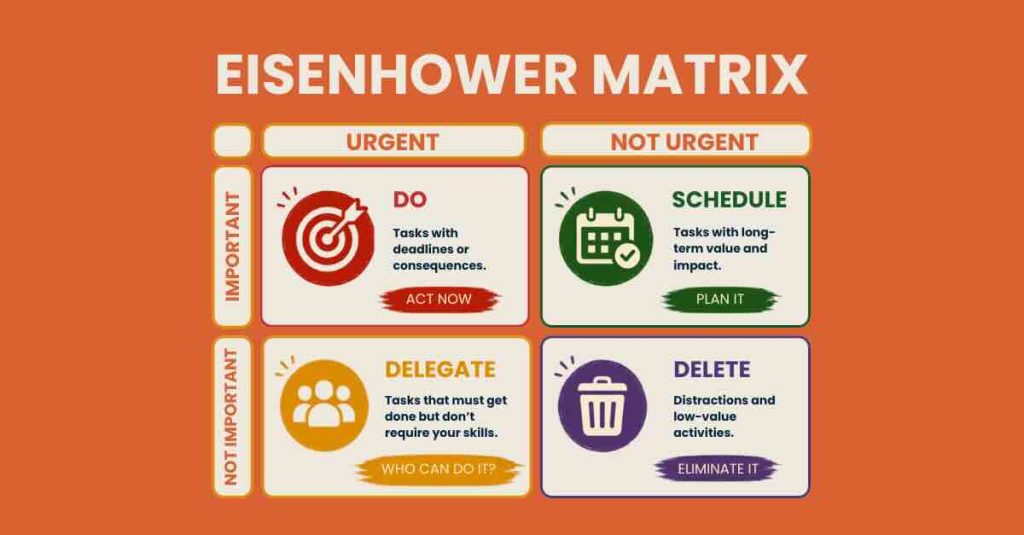
Most Managers Don't Have a Time Problem. They Have a Priorities Problem.
Every day, someone else's urgency becomes yours: messages, meetings, requests, fires to put out. You are moving fast, but somehow never forward. And at the end of the week, you look back and realise the things that actually matter, the ones that would move the needle for your team and your organisation...never got touched.
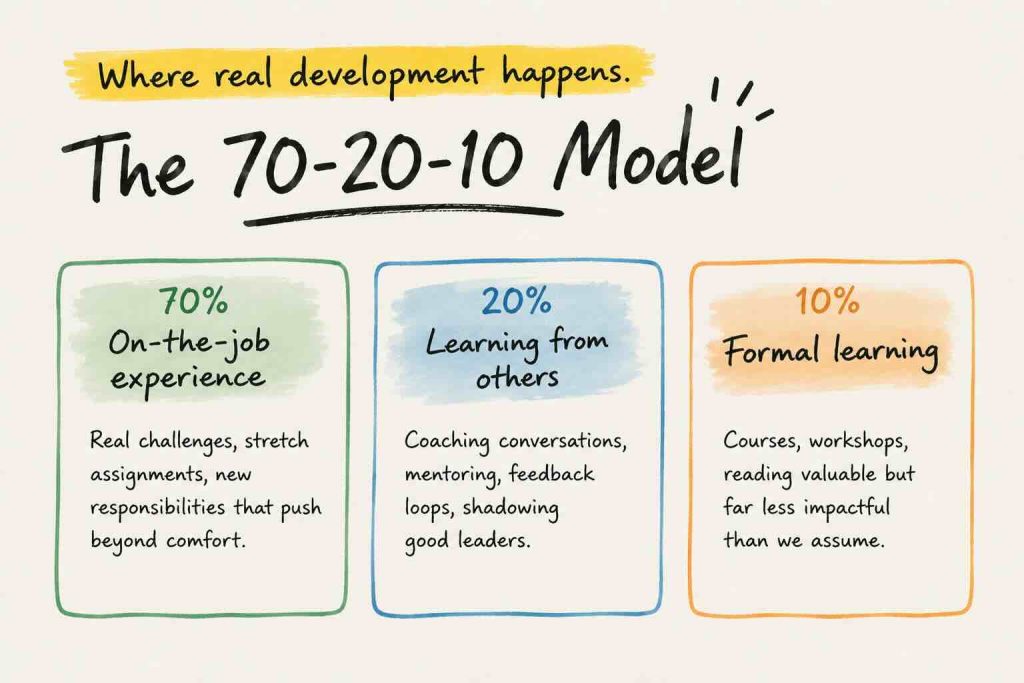
Stop managing people. Start developing them.
Management is about control. Development is about growth. Your goal as a leader is not to make yourself indispensable. It is to make yourself unnecessary
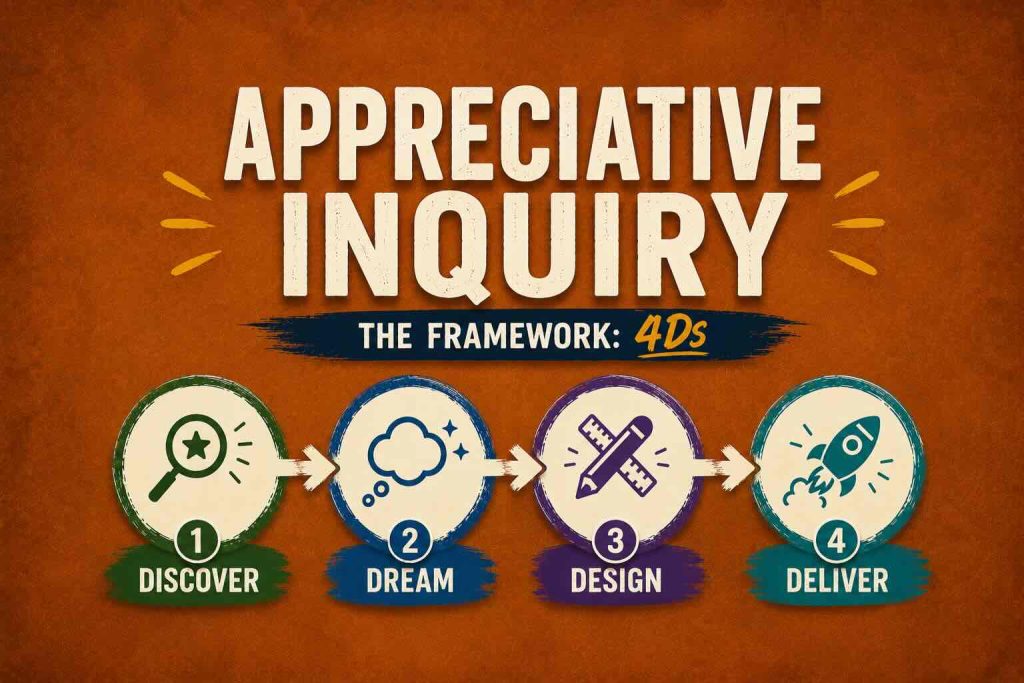
How Appreciation Can Improve Your Team's Performance
What if the culture you want already exists in your team? You just haven't surfaced it yet.

Stay connected. Get insights, tools, and reflections delivered to your inbox.
Subscribed!
Something went wrong. Please try again.